
Clickonline

US deploys diplomats against data sovereignty – why now is the time to take control
According to a recent article by Reuters (February 25, 2026), the US government has instructed diplomats to actively engage in
With a Click arranged in the Netherlands!

These are the general terms and conditions of Klikonline located at Heereweg 331, 2161 BL Lisse, registered with the Chamber of Commerce under registration number 91513634 and available online at www.klikonline.nl (hereinafter referred to as "Supplier").
These general conditions apply to any agreement for the provision of services concluded between Supplier and the natural or legal persons who purchase the services (hereinafter "Customer").
Supplier and Customer are hereinafter collectively referred to as "Parties" and individually as the "Party".
Personal data may be processed as part of Supplier's services. The processor agreement applicable to such processing is set out in Appendix 1 and forms an integral part of these general terms and conditions.
All capitalized terms in these terms and conditions, whether singular or plural, shall have the meanings ascribed to them in this Article.
1.1. Account: any user interface through which Customer, after entering login credentials, can manage and configure (certain aspects of) the Services, as well as the configuration(s) and the files stored for and by Customer itself.
1.2. Website: the Supplier's website, accessible via the domain mentioned in the preamble to these General Terms and Conditions.
1.3. General Terms and Conditions: the provisions contained in the present document.
1.4. Consumer: Customer acting as a natural person, not in the exercise of his profession or business.
1.5. Services: the products and/or services to be provided by Supplier to Customer pursuant to an Agreement.
1.6. Intellectual Property Rights: all rights of intellectual property and related rights, including but not limited to copyrights, database rights, rights to domain names, trade name rights, trademark rights, design rights, neighboring rights, patent rights, as well as rights to know-how.
1.7. Customer Data means any data stored by Customer (or the end users of the Services) through or using the Services, or otherwise made available to Supplier by Customer (or the end users of the Services).
1.8. Materials: all works, such as websites and (web) applications, software, house styles, logos, folders, brochures, leaflets, lettering, advertisements, marketing and/or communication plans, concepts, images, texts, sketches, documentation, advice, reports and other products of the mind, as well as preparatory material thereof and files or data carriers (whether encrypted or not) on which the Materials are located.
1.9. Agreement: any agreement between Supplier and Customer under which Supplier provides Services to Customer and of which these General Terms and Conditions and any appendices form an inseparable part.
1.10. Additional Terms Overview: the online overview of third-party terms and conditions that, in addition to these General Terms and Conditions, apply additionally to certain Services. The overview and the relevant conditions can be accessed and downloaded at https://www.klikonline.nl/over/algemene-voorwaarden/.
1.11. Service Level Agreement: any further agreement concluded between the Parties in which arrangements are made about the quality of the Services provided, which is linked to concrete and measurable key performance indicators.
1.12. Increased Risk Applications: applications where an error in the Services may result in death or serious injury, serious environmental damage or loss of (personal) data with very high consequential damages. Examples of Elevated Risk Applications are: transport systems where an error may result in trains derailing or aircraft crashing; medical systems where an error may result in a patient not receiving treatment or receiving the wrong treatment; systems on which a substantial part of the population depends for the allocation of crucial government services, such as DigiD; systems in which (a large amount of) medical data or other special categories of data within the meaning of the General Data Protection Regulation (hereinafter: "AVG"), or otherwise very sensitive data are stored.
1.13. Processor Agreement: any further agreement concluded between the Parties in which arrangements are made regarding the handling and security of personal data, which in such case replaces Schedule 1 to these General Terms and Conditions.
1.14. Working Days: the days from Monday to Friday inclusive, with the exception of official Dutch public holidays and other days for which Supplier has indicated in advance to be closed.
1.15. Business Hours: the Supplier's business hours on Business Days, as indicated on the Website.
2.1. These General Terms and Conditions apply to any offer or quotation by Supplier in respect of Services and form an integral part of any Agreement for the provision thereof. This expressly also applies to any future quotations, offers or Agreements under which these General Terms and Conditions have not been reissued to Customer.
2.2. Any terms or conditions set by Customer or other further agreements between Supplier and Customer that differ from or do not appear in these General Terms and Conditions shall only be binding on Supplier if and insofar as Supplier has expressly accepted them in writing.
2.3. Any general (purchase) conditions of Customer are expressly not applicable.
2.4. Provisions pertaining to specific Services, if applicable, take precedence over general provisions pertaining to all Services in the event of inconsistencies.
2.5. Products and/or services of third parties may be part of the Services. If that is the case, (the use of) those products and/or services are additionally subject to the (general) terms and conditions of the third party in question, overriding any deviating terms and conditions in these General Terms and Conditions. Customer can consult and download all additional conditions via the Overview Additional Conditions.
2.6. In case of contradictions between the applicable documents, the following order of precedence shall apply. Otherwise, the documents shall apply in a complementary manner.
a. Agreement;
b. Service Level Agreement (if applicable);
c. additional terms and conditions (if applicable);
d. General Terms and Conditions;
e. Processor Agreement (if applicable).
2.7. These General Terms and Conditions replace all previously agreed (general) terms and conditions for the provision of Services. This also applies to Contracts already in progress.
3.1. Customer can request the Services directly from the Website. Customer can also request an offer without obligation. The Agreement arises at the moment of sending the e-mail (whether or not automatically generated) from Supplier confirming the acceptance of the request or the confirmation of the acceptance of the offer by Customer. This moment also serves as the effective date for the Services, unless otherwise agreed in writing.
3.2. Notwithstanding the provisions of article 6:225 paragraph 2 of the Civil Code, Supplier shall not be bound by a deviating acceptance of an offer of Supplier made by a potential Customer.
3.3. Supplier is not obliged to accept a request or acceptance. Ground for refusal shall constitute, for example, but not exclusively:
a. the absence of required information or documents necessary for the conclusion of the Agreement, including at least a copy of a valid, legal means of identification, in case of representation, sufficient proof of representative authority, such as an extract from the Chamber of Commerce or a validly signed authorization;
b. errors in the quotation issued;
c. legal incapacity of Customer.
3.4. If an application or acceptance is rejected by Supplier, Supplier shall in principle notify Customer in writing or electronically within fourteen (14) days after receipt of the application or acceptance. Refusal or no response by Supplier shall never lead to liability for damages, directly or indirectly resulting therefrom.
3.5. If Customer is a Consumer, Customer shall have the opportunity during a period of fourteen (14) days from the moment the Agreement is concluded to rescind it in writing and free of charge. Customer can exercise its right of withdrawal by sending an unambiguous statement to Supplier within the cooling-off period. For this purpose, Customer can use the model withdrawal form (findable on the Website), but this is not mandatory.
3.6. The right of withdrawal does not apply to Agreements to provide Services, after fulfillment of the Agreement, if:
a. performance has begun with Customer's express prior consent; and
b. Customer has declared to waive its right of rescission once Supplier has fulfilled the Agreement.
4.1. After the formation of the Agreement, the Supplier shall endeavor to perform it to the best of its ability and under the application of sufficient care and skill.
4.2. Terms of delivery specified by Supplier shall always be indicative in nature, except where and to the extent expressly provided otherwise in writing.
4.3. Customer shall provide Supplier with all support necessary and desirable to enable correct and timely delivery of the Services. In any event, Customer shall provide Supplier with all data and other information that Supplier indicates is necessary, or that Customer should reasonably understand is necessary for the performance of the Agreement. The period within which Supplier shall perform the Agreement shall not commence until all requested and required data has been received by Supplier.
4.4. Customer shall give Supplier all reasonable cooperation in the performance of the Agreement. Customer shall provide Supplier and employees of Supplier who perform work at Customer's offices or work on Customer's systems for the provision of Services with all necessary support for the performance of their work.
4.5. If Customer knows or can suspect that Supplier will have to take certain (additional) measures to be able to comply with its obligations, Customer shall inform Supplier immediately. This obligation applies for instance if Customer knows or should foresee that an extraordinary peak in load on the systems of Supplier will occur, which in any probability could cause unavailability of the Services. After warning, Supplier shall make every effort to prevent unavailability of the Services. Unless otherwise expressly agreed in writing, all reasonable additional costs incurred in doing so may be charged to Customer.
4.6. If and to the extent required for the proper performance of the Agreement, Supplier shall be entitled to have certain work performed by third parties. Any related unexpected additional costs shall only be for Customer's account if agreed in writing in advance. These General Terms and Conditions shall also apply to the work performed by these third parties as subcontractors under the Agreement, subject to the provisions of Article 2.5.
4.7. All changes in the Agreement and all additional non-agreed work, whether at the request of the Customer or as a result of the fact that a different performance is necessary due to any circumstances whatsoever, when additional costs are involved are considered as additional work. The procedure laid down in Article 15 (Additional Work) therefore applies.
5.1. If such is part of the Services, Supplier will provide Customer with access to an Account after formation of the Agreement by providing login details, or by giving Customer the opportunity to create its own login details.
5.2. All Accounts and associated login credentials are strictly confidential and may not be shared with third parties.
5.3. Any action that takes place using the Customer's Account or an Account created by the Customer is deemed to have taken place under the responsibility and at the risk of the Customer. If login details for an Account are lost or leaked, or if Customer suspects or should reasonably suspect or know that abuse of an Account is taking place, Customer must immediately take all measures necessary and desirable to prevent or stop abuse.
These measures may include, for example, changing the login details or blocking the Account. Customer must also immediately report this to Supplier so that it can take any additional measures.
6.1. Customer is prohibited from using the Services to violate Dutch or other laws or regulations applicable to Customer or Supplier or to infringe the rights of others.
6.2. You are prohibited (whether or not it is legal) from offering or distributing any materials using the Services that:
a. contain or reference malicious content (such as viruses, malware or other malicious software);
b. infringe third-party rights (such as Intellectual Property Rights), or are unmistakably libelous, defamatory, offensive, discriminatory or hateful;
c. contain information about (or that may be helpful in) violating the rights of third parties, such as hacking tools or computer crime explanations designed to (induce) the reader to engage in criminal conduct rather than to defend against it;
d. constitute a violation of the privacy of third parties, including in any case but not limited to the processing of personal data of third parties without consent or other basis; or
e. contain hyperlinks, torrents or references with (locations of) materials that infringe on Intellectual Property Rights.
6.3. The Customer is only allowed to distribute (unsolicited) commercial, charitable or idealistic communication using the Services in compliance with the applicable laws and regulations.
6.4. The distribution of pornographic Materials through the Services is permitted insofar as it does not constitute a nuisance or other violation of these General Terms and Conditions and only insofar as this possibility is not excluded in the Agreement.
6.5. Customer shall refrain from obstructing other customers or Internet users or causing damage to systems or networks of Supplier or other customers. Customer is prohibited from starting up processes or programs, whether or not via the systems of Supplier, which Customer knows or can reasonably suspect will hinder or damage Supplier, its customers or internet users.
6.6. Customer indemnifies Supplier and shall hold Supplier harmless from any claim, suit or action by a third party in connection with (the content of) the data traffic or Material posted on or distributed through the Service by Customer, Customer's customers and or other third parties.
6.7. If in the opinion of Supplier any hindrance, damage or other danger arises for the functioning of the computer systems or the network of Supplier or third parties and/or of the service provision via the Internet, in particular due to excessive sending of e-mail or other data, denial-of-service attacks, poorly secured systems or activities of viruses, Trojans and comparable software, Supplier is entitled to take all measures it reasonably considers necessary to avert or prevent this danger. Supplier may recover the costs reasonably necessary associated with these measures from Customer, if and insofar as Customer can be blamed for the cause.
6.8. Unless otherwise agreed in writing, Customer may not use the Services for Increased Risk Applications.
6.9. If Customer requires any license or other permission from government agencies or third parties for the specific use it is giving or intends to give to the Services, Customer must take care to obtain the same. Customer warrants to Supplier that it holds all permits and/or consents necessary for Customer's use of the Services.
7.1. If a third party notifies Supplier or if Supplier itself observes that, with the use of the Services, certain materials are stored or distributed that infringe third-party rights or otherwise violate laws and regulations or the Agreement, Supplier shall notify Customer of the complaint or violation as soon as possible.
7.2. Supplier shall give Customer the opportunity to respond to the complaint within a reasonable time and, if necessary, take action. If Customer fails to do so, Supplier may itself take all reasonable measures to end the violation. This may result in certain data being deleted or made inaccessible, or access to the Services being blocked in whole or in part. In urgent cases (for example, when Supplier receives reports regarding the possible presence of child pornography) Supplier may take immediate action, without alerting Customer. If Customer is a Consumer, immediate intervention by the Supplier is only possible in the form of removal or blocking of the unlawful materials. However, in that case the legal (suspension) rights of Supplier shall continue to apply in full.
7.3. If potentially criminal materials are involved, Supplier shall be entitled to report them. In doing so, Supplier may hand over the relevant materials and all relevant information about Customer and third parties (including Customer's customers) to the competent authorities and perform any other acts that such authorities request Supplier to perform as part of the investigation.
7.4. Supplier shall not be liable for any damages incurred by Customer, its customers or end users as a result of a shutdown of the Services or removal of materials under the procedure described in this Article.
7.5. Supplier is entitled to hand over the name, address and other identifying data of Customer or the relevant end user to a third party who complains that Customer is infringing its rights, provided that the applicable legal or jurisprudential requirements for this are met.
7.6. Customer indemnifies Supplier against any third party claims based on the assertion that materials stored or distributed using the Services infringe its rights or are otherwise unlawful.
8.1. If and to the extent that the Services (also) involve the provision and/or management of domain names and/or IP addresses, the provisions of this Article 8 shall apply.
8.2. When providing or managing domain names, Supplier acts as an intermediary between Customer and the provider of the domain name registration and domain name management services. Customer explicitly authorizes Supplier to do so, as well as the other actions described in this Article 8.
Supplier has no influence on the distribution process of domain names. Supplier has no obligation to guarantee the continuity or existence of a registered domain.
8.3. The provision, application, assignment and possible use of a domain name or IP address depend on and are subject to the applicable rules and procedures of the relevant registering authorities, such as the Stichting Internet Domeinregistratie Nederland in the case of .nl domain names and Réseaux IP Européens (RIPE) in the case of IP addresses. The Supplier gives no guarantee that an application will also be honored. The relevant authority will decide on the allocation.
8.4. Customer must comply with the rules set by registering authorities for application, assignment or use of a domain name. The various domains are managed by different, mostly national organizations. All these organizations have their own (general) terms and conditions relating to the registration of the relevant domains and sub-level domains, as well as their own regulations regarding domain name disputes. If domain names are the subject of the Agreement, the additional terms and conditions of, inter alia, each relevant gTLD (general Top Level Domain) and ccTLD (country code Top Level Domain) will apply. The relevant additional terms and conditions can be accessed via the Additional Terms and Conditions Overview.
8.5. Customer can only learn the fact of registration from Supplier's confirmation stating that the requested domain name or IP address has been registered. An invoice for registration fees is not confirmation of registration.
8.6. Customer shall always notify Supplier promptly, but in any case within 5 calendar days, and in writing of changes regarding the domain holder's data.
8.7. Customer must comply with all laws and regulations and all conditions set by the registering authorities when using domain names and IP addresses. The use shall take place entirely under the responsibility of Customer. Customer indemnifies and holds Supplier harmless for all damages related to (the use of) a domain name or IP address on behalf of or by Customer. Supplier is not liable for the loss by Customer of its right(s) to a domain name (e.g. in the event of termination by Customer itself or by decisions in domain name disputes) or for the fact that the domain name is applied for and/or obtained by a third party in the interim and Customer is not entitled to a replacement domain name or refund in those cases, except in the event of intentional or deliberate recklessness on the part of Supplier.
8.8. Notwithstanding the provisions of Article 8.2, the Supplier has the right to make the domain name or IP address inaccessible or unusable, or (if applicable) to place it in its own name (or have it placed in its own name) if the Customer demonstrably fails to comply with the Agreement, but only after expiry of a reasonable period for compliance set in a written notice of default.
8.9. The IP addresses made available to Customer remain under the control of Supplier or its suppliers and, unless otherwise agreed in writing, cannot be taken away upon any termination of the Agreement. Multiple Customers of Supplier may operate under a given IP address. Supplier shall at all times have the right to change the IP address or assign another address to Customer.
8.10. In the event of termination of the Agreement for breach of contract by Customer, Supplier shall, notwithstanding its mediating role, be entitled to terminate a domain name of Customer, without being liable in any way for resulting damages.
9.1. If and to the extent that the Services (also) involve the provision and/or management of SSL/TLS certificates, the provisions of this Article 9 shall apply.
9.2. The application and award procedure of SSL/TLS Certificates is subject to the rules and procedures of the Certificate Authority issuing the SSL/TLS Certificate. The relevant Certificate Authority decides on the award of the SSL/TLS Certificate and will carry out any checks deemed necessary for this purpose. In the application process, the Supplier only fulfills a mediating role and does not guarantee that an application will be honored.
9.3. The SSL/TLS Certificate is valid for the agreed period unless it is revoked prematurely. Supplier (notwithstanding its intermediary role) and the relevant Supplier may immediately revoke the SSL/TLS Certificate if:
a. it appears that Customer has provided incorrect information for the purpose of obtaining the SSL/TLS certificate; or
b. the reliability of the SSL/TLS Certificate has been compromised in the opinion of Supplier and/or the relevant supplier.
c. Customer shall comply with all applicable laws and regulations and all conditions set by the Certificate Authority when using the SSL/TLS Certificate.
9.4. Customer must comply with all laws and regulations and all conditions set by the certificate authority when using the SSL/TLS certificate. Supplier shall refer to these conditions during the ordering process.
9.5. If the SSL/TLS Certificate is revoked, Customer is not entitled to a replacement SSL/TLS Certificate or refund of the cost of the SSL/TLS Certificate by Supplier, unless the revocation is due to an attributable failure of Supplier. In such a case, Supplier shall provide a new SSL/TLS Certificate to replace for the remaining period of the original SSL/TLS Certificate. In other cases, Customer may need to rely on the terms and conditions of the relevant Certificate Authority.
9.6. Unless otherwise agreed in writing, Supplier shall make reasonable efforts to inform Customer before the SSL/TLS Certificate expires and needs to be renewed. However, it always remains Customer's own responsibility to renew SSL/TLS certificates in a timely manner.
10.1. Unless otherwise agreed in writing, Customer is solely responsible for the installation and configuration of the Services. Supplier may charge Customer for any support in this regard.
10.2. Except and to the extent it follows from the nature of the Service (e.g., in the case of non-managed virtual private servers), Customer does not have the right to independently make modifications or install software within Supplier-managed Services (such as but not limited to online workstations and virtual private servers) without Supplier's written consent.
10.3. If and to the extent that the Services (also) involve the installation and/or configuration of software, Clause 10.4 applies.
10.4. If Customer wishes to implement a modification to the software independently, this shall be done entirely at Customer's own risk and responsibility, unless Customer has notified Supplier in advance of the desired modification and Supplier has approved it in writing. Supplier may attach conditions to this approval.
11.1. If and to the extent that the Services relate (in part) to dedicated hosting, the provisions of this Article 11 shall apply.
11.2. Supplier makes its own hardware available to Customer in the case of dedicated hosting. The storage space and capacity of the hardware are therefore not shared with other customers of Supplier. The hardware is and remains the property of Supplier.
11.3. Customer is not entitled to access to the server room, unless it is explicitly responsible under the Agreement for the installation and/or maintenance with respect to the hardware and access is necessary in light thereof. Access to the server rooms is subject to the provisions laid down in Article 13.
11.4. Supplier is entitled to assign other hardware to Customer, provided that the replacement hardware reasonably meets the requirements that applied to the original hardware. Supplier shall in such case make a plan of action in advance with Customer for the planned relocation, except in cases of urgency.
12.1. If and to the extent that the Services relate (in part) to colocation, the provisions of this Article 12 shall apply.
12.2. Supplier shall make available to Customer, within the framework of colocation, only a server room, network and power supplies. Customer shall provide its own hardware.
12.3. Customer is not entitled to access to the server room, unless he is explicitly responsible under the Agreement for the installation and/or maintenance with respect to the hardware and access is necessary in light thereof. Access to the server rooms is subject to the provisions laid down in Article 13.
12.4. Supplier may move Customer's hardware to another space in the data center or to another data center, provided that the replacement space reasonably meets the requirements that also applied to the original space. Supplier and Customer shall mutually agree on a time for the move, on the understanding that Supplier shall always be given the opportunity by Customer to perform the move within 14 days after the consultation. If under the Agreement Customer is itself responsible for the maintenance of the hardware, Customer shall move the hardware within a reasonable period not exceeding fourteen (14) days after a request issued by Supplier for that purpose. In urgent cases, Supplier may in all cases move the server itself.
12.5. Both Parties shall bear their own costs associated with the move referred to in the previous paragraph.
12.6. Customer guarantees that the hardware will not cause any damage to the server room, the third party hardware placed therein or the cabling installed therein, or disrupt or affect the operation thereof.
12.7. Supplier shall have the right to move, disable or remove the hardware if it deems it necessary in its professional opinion, without being liable in any way for resulting damages.
12.8. Customer is obliged to adequately insure the hardware and keep it insured. At Supplier's first request, Customer shall provide the policy for the insurance taken out by Customer.
12.9. If Customer fails to fulfill the Agreement, Supplier has the right to retain the hardware until Customer has fulfilled all its payment obligations.
13.1. Customer shall only be granted access to the server room if this explicitly follows from the Agreement and is necessary for the installation, maintenance and/or relocation of hardware. Customer is obliged to follow all conditions and reasonable instructions set by Supplier and/or the relevant third party when entering the server room.
13.2. Customer shall only have the hardware maintained by sufficiently skilled and competent personnel. It is not permitted to grant access to the server room to third parties (such as customers of Customer), unless Supplier has given written permission.
13.3. Customer shall perform installation and maintenance work on the hardware as efficiently as possible without causing inconvenience to Supplier or others.
13.4. The cabling in the server room (including in any case cabling in shared racks and under the floors) shall be installed exclusively by Supplier. Only the cabling in private racks shall be provided by Customer.
13.5. It is explicitly not allowed to make changes to the server room unless Supplier has given written permission. If Customer has made changes without written permission, Supplier shall be entitled to demand restoration of the server room or to carry out restoration itself or have it carried out at Customer's expense and risk.
13.6. Supplier shall be entitled at any time to enter the server room to verify Customer's compliance with the regulations described above and any additional terms, conditions, procedures and instructions.
13.7. Upon relocation of hardware or termination of the Agreement, Customer shall deliver the server room as provided by Supplier at the start of the Agreement.
13.8. If Customer fails to comply with the Agreement, Supplier in entitled to deny Customer access to the server room. If Customer is a Consumer, this provision shall not apply until Customer is in default.
14.1. Unless Customer is a Consumer and if it appears from the nature of a relevant Service that it is intended for redelivery and/or to the extent that the Agreement (also) explicitly provides for the redelivery of Services, the provisions of this Article 14 shall apply.
14.2. Customer is permitted to resell the Services. Customer may only do so in combination with or as part of Customer's own products or services and without explicitly disclosing the name of Supplier as a supplier or subcontractor (e.g. through service descriptions or advertisements) (hereinafter "White-Label" reselling), unless otherwise agreed in writing. Customer shall indemnify Supplier and hold Supplier harmless from all claims by its Customer. Supplier may also take full action in the event of violations of these General Terms and Conditions by that Customer.
14.3. Unless otherwise agreed in writing, in the case of reselling, Customer shall act in its own name and for its own account and risk. Customer is expressly not permitted to conclude agreements for or on behalf of Supplier or to create the impression that it is acting as an agent or representative of Supplier.
14.4. Customer is, in the case of resupply, itself responsible for providing support regarding the resupplied Services of Supplier to its customers.
14.5. Customer shall impose on its customers at least the same obligations as those applied by Supplier with respect to the Services. Supplier may require Customer to provide evidence of this. In the case of resupply of Services in the context of domain name registration, Customer must, if requested by Supplier, allow inspection of the order confirmations relating to the registration of domain names for the benefit of Customer's customers.
14.6. Customer's failure to pay Customer or failure to pay Customer on time shall not relieve Customer of its payment obligations to Supplier.
14.7. Customer may, if it has been agreed that the redelivery will take place other than in a White-Label manner, only communicate in a businesslike manner that it makes use of the Services and may otherwise not use any trade names, brand names, logos or other distinguishing marks of Supplier without having received explicit permission to do so. Customer shall strictly follow any instructions given by Supplier regarding the use of such distinctive signs at all times.
14.8. Supplier shall primarily contact Customer's customers through Customer. However, in urgent cases, such as in the event of (imminent) damage or nuisance to third parties caused by activities of the Customer concerned, Supplier shall be entitled to contact Customer's customers directly, unless otherwise agreed in writing.
14.9. Customer is at all times fully liable to Supplier for what its customers do or fail to do through the Services provided by Supplier. Customer shall indemnify Supplier against any claims by third parties in this regard.
14.10. In the event of termination or dissolution of the Agreement due to default of Customer, Supplier is entitled to approach Customer's customers and make an offer in order to continue the Services itself or to have the Services continued by another reseller. At the first request of Supplier, Customer shall provide all necessary (contact) data for this purpose.
15.1. Customer may at any time request Supplier to perform work beyond the scope of the Agreement (or requests for "additional work"). However, Supplier is not obliged to comply with such requests.
15.2. In the event of additional work, Supplier shall inform Customer in advance of the associated (estimated) costs and shall only perform the additional work after Customer's approval. However, the foregoing does not apply to additional work that is necessary within the framework of the already agreed Services. Such additional work may be performed on the basis of subsequent costing without the consent of Customer.
15.3 When performing additional work, the Supplier shall in each case base itself on the agreed rates, or in the absence thereof on the usual rates. Supplier may require that an additional agreement be concluded for the performance of the additional work.
16.1. Supplier may impose a limit on the capacity (for example, the amount of data traffic, processing capacity, memory, storage or power) that Customer may or can actually use under the Services.
16.2. If exceeded, the Supplier is entitled to charge additional fees or (after written warning) to limit or reduce the use of the Services to the permitted capacity.
16.3. If a certain limit or capacity applies to the Services, it may be adjusted upwards or downwards in consultation with Supplier. An increase or upgrade of the Services may be made with immediate effect, however, a decrease or downgrade may be made only by the date of the first renewal of the Agreement and thereafter by the end of each month, subject to a notification period of one (1) month.
16.4 Any data traffic credit granted to Customer is not transferable to a subsequent month, another agreement or another customer of Supplier.
16.5. Supplier is not liable for the consequences of the inability to send, receive, store or modify data or the incorrect functioning of the Services if Customer exceeds an agreed limit (for example, the amount of data traffic, processing capacity, memory, storage or power).
17.1. If there is no capacity limit (for example, the amount of data traffic, processing capacity, memory, storage or power) for the Services, a "fair use" policy applies to the relevant Services.
17.2. Supplier may specify further details of the fair use policy, which in that case will be made available to Customer in writing or can be consulted via the Website. Supplier reserves the right to amend or supplement the policy in the interim and shall notify Customer in such case in advance in writing.
17.3. In the absence of an explicitly defined fair use policy, this will be understood to mean that Customer may use a maximum of twice the capacity used by other customers of Supplier purchasing the same or similar Services under similar circumstances.
17.4. If the use of the Services exceeds the fair use policy, Supplier is entitled to limit or block the Services or offer Customer an alternative Service. Supplier is not responsible for the non-functioning or incorrect functioning of the Services in case of an excess.
18.1. Supplier shall make every effort to realize good quality and uninterrupted availability of Services and associated systems and networks and to realize access to data stored by Customer with them. However, Supplier offers no guarantees on quality or availability, unless otherwise agreed in the offer by means of a Service Level Agreement (SLA) designated as such.
18.2. The performance of maintenance work, whether or not as part of the Services provided, may result in temporary unavailability or limited use of the Services. If Supplier anticipates that certain maintenance will result in full or partial unavailability, Supplier will make every effort to perform the work at times when use of the Services is limited.
18.3. Supplier shall endeavor to give at least two Business Days' notice of scheduled maintenance work, whether or not as part of the Services provided. However, emergency maintenance may be performed at any time, even without prior notice to Customer.
18.3.1. The Supplier shall make every effort to be able to guarantee the quality of the Service. When it is necessary for the Service to function properly, in the case of performance and security measures, the Supplier is free to make the Service available on another server. If the Service is provided on a shared environment, the Customer's consent is not necessary.
18.4 Supplier shall make itself available to provide a reasonable level of remote customer support, during Business Hours, to the extent the applicable SLA does not provide otherwise. Requests for support from Customer that cannot be handled easily, such in the opinion of Supplier, shall be considered "additional work". Such requests shall therefore be subject to the procedure laid down in Article 15.
18.5. The Supplier shall make every effort to respond to any support request as quickly as possible, but - unless otherwise agreed in the Service Level Agreement (SLA) - gives no guarantees in this regard.
18.6. If and to the extent that the Services relate (in part) to the maintenance of software by Supplier, the provisions of Clauses 18.7 to 18.9 inclusive shall apply.
18.7. The Supplier shall make every effort to keep the software used in the Service up-to-date. In doing so, however, the Supplier is in turn dependent on its supplier(s). The Supplier is entitled not to install certain updates or patches if, in its opinion, this will not benefit the proper provision of the Service.
18.8. Supplier shall make every effort to modify the software from time to time to improve its functionality and to correct errors. In the event of new functionality or changes that may substantially alter the functioning of the software, Supplier shall make every effort to inform Customer in advance.
18.9. Supplier shall endeavor to add changes and new functionality requested by Customer to the Software. However, Supplier is always entitled to refuse such request if, in its opinion, it is not feasible or may impede proper operation, manageability or availability of the Software.
19.1. Unless otherwise agreed there is no obligation on Supplier to make backup copies (backups). Supplier may itself choose to make backups. These backups will then be made in the event of a failure on the part of Supplier. Customer may additionally agree with Supplier that it will purchase Services in the context of making backups and making them available to Customer for a fee. Only in that case shall the other provisions of this article apply.
19.2. All efforts as made by Supplier in the context of backups for the benefit of Customer and at Customer's request shall be provided for additional compensation. Insofar as the Parties have not agreed otherwise, the fee shall be calculated on the basis of the hourly rate applied by Supplier at that time.
19.3. With respect to the backups, Customer is at all times responsible for the correctness of the data and any recovery (and prior verification) of the backups. The backups may be destroyed at any time after termination of the Agreement. It is at all times the responsibility of Customer to request a backup copy upon termination.
20.1. All Intellectual Property Rights in all Materials developed or made available by Supplier under the Agreement are vested exclusively in Supplier or its licensors.
20.2. Customer only acquires the rights of use and powers expressly granted in these Terms and Conditions, the Agreement or otherwise in writing and Customer shall not otherwise reproduce or disclose these Materials.
The foregoing is an exception if it is unmistakable that Customer has been inadvertently omitted to expressly grant such a right. Delivery of source code of Materials, however, is at all times only mandatory if explicitly agreed upon or as a result of mandatory law.
20.3. Unless and to the extent otherwise agreed in writing, Customer shall not be permitted to remove or alter any indication concerning Intellectual Property Rights from the Materials of Supplier or its licensors, including indications concerning the confidential nature and secrecy of the Materials of Supplier or its licensors.
20.4. Supplier is permitted to take technical measures to protect its Materials. If Supplier has secured such Materials by means of technical protection, Customer shall not be permitted to remove or circumvent such protection, except if and to the extent required by mandatory law to the contrary.
21.1. All rights to Customer Data, including any Intellectual Property Rights vested therein, are vested in Customer. Supplier shall make no ownership claims to them.
21.2 Customer hereby grants a limited right of use to Supplier to use the Customer Data during the term of the Agreement to the extent necessary for the purpose of providing the Services.
21.3. Unless otherwise agreed in writing, Supplier is not obliged to load and/or migrate Customer Data as part of the Services. Supplier may charge Customer for support in this regard separately.
21.4. If and to the extent Customer Data consists of personal data, it shall be subject to the agreements set forth in Exhibit 1.
21.5. If the Agreement terminates, regardless of the reason for termination, Supplier shall destroy or delete the Customer Data as soon as possible, however, subject to the provisions of Clause 28 (Exit Policy).
22.1. Unless expressly stated otherwise with an amount, all prices quoted by Supplier are exclusive of sales tax and other levies imposed by the government.
22.2 If a price is based on data provided by Customer and these data prove to be incorrect, Supplier shall be entitled to adjust the prices accordingly, even after the Agreement has already been concluded.
22.3. Supplier is entitled to increase the prices used in this Agreement annually, by a maximum percentage of 5% or on the basis of the relevant price index of the CBS, without this resulting in an option for Customer to terminate the Agreement. In addition, prices can at all times be increased by Supplier in the interim if the rates of suppliers, such as, but not limited to, suppliers of electricity, electronic communication services, domain name registrations, IP addresses, data centers, software and (public) cloud solutions increase, without this resulting in an option for Customer to terminate the Agreement.
22.4. Notwithstanding the previous paragraphs of this article, if Customer is a Consumer, Customer has the right to rescind the Agreement if prices are increased within three months of the conclusion of the Agreement.
22.5. Price changes that do not take place under Clause 22.3 are subject to the same conditions and procedures as changes to the Services and to these General Terms and Conditions. If Supplier wishes to reduce the applicable prices, Supplier is entitled to implement this reduction immediately, without possibility of cancellation by Customer.
23.1. Supplier shall invoice Customer for the amounts owed by Customer. In doing so, Supplier may issue electronic invoices. Supplier has the right to charge periodically due amounts prior to the delivery of the Services.
23.2. The payment term of an invoice is 14 days from invoice date, unless otherwise agreed in writing.
23.3. If Customer has not paid in full after the payment deadline, it shall automatically be in default without the need for notice of default.
23.4. Without prejudice to the above, all costs associated with the collection of outstanding debts - both judicial and extrajudicial (including the costs of lawyers, bailiffs and collection agencies) - shall be at the expense of Customer without notice of default being required.
23.5. Recourse by Customer to suspension or set-off is not permitted.
23.6. The provisions contained in Article 23.3 to Article 23.5 do not apply if and insofar as Customer is a Consumer.
23.7. If Customer is in default, this will have the following consequences:
a. legal interest is due on the outstanding amount;
b. the websites and other Materials hosted for Customer may be made inaccessible without further notice until the outstanding amounts, interest and the like are paid.
23.8. All claims of Supplier shall be immediately due and payable if Customer is declared bankrupt, Customer applies for or is granted suspension of payments, Customer's operations are terminated or its business is liquidated.
24.1. The Supplier shall not be liable in connection with the formation or performance of the Agreement except in the cases mentioned below, and at the most up to the limits specified therein.
24.2. The total liability of Supplier for direct damage suffered by Customer as a result of an attributable shortcoming in the performance by Supplier of its obligations under the Agreement, explicitly also including any shortcoming in the performance of a guarantee obligation agreed on with Customer, or by an unlawful act of Supplier, its employees or third parties engaged by it, shall be limited per event or a series of related events to an amount equal to the total of the fees (exclusive of VAT) paid by Customer under the Agreement in the last six (6) months. In no event, however, shall the total compensation for direct damages exceed ten thousand (10,000) euros (excluding VAT).
4.3. Supplier's liability for attributable shortcomings in the performance of the Agreement shall only arise if Customer gives Supplier immediate and proper notice of default in writing, setting a reasonable term to remedy the shortcoming, and Supplier continues to fail imputably in the performance of its obligations even after that term. The notice of default must contain as detailed a description as possible of the failure, so that Supplier is able to respond adequately. The notice of default must be received by Supplier within 30 days of the discovery of the damage.
24.4. Supplier is explicitly not liable for indirect damages, including but not limited to consequential damages, lost profits, image damage, missed savings and damages due to business interruption.
24.5. The exclusions and limitations referred to in this Clause 24 shall lapse if and insofar as the damage is the result of intentional or deliberate recklessness on the part of the Supplier's management.
24.6. Any limitation of liability contained in these General Terms and Conditions does not apply to Consumers. Towards Consumers, the liability provisions of the law apply.
24.7. Customer is liable to Supplier for damage caused by a fault or shortcoming attributable to it. Customer shall indemnify Supplier against claims regarding non-compliance with the Agreement when using the Services by or with the consent of Customer. This indemnification shall also apply with respect to persons who, although not employees of Customer, nevertheless used the Services under the responsibility or with the consent of Customer.
25.1 Supplier shall not be obliged to perform the Agreement if performance is prevented as a result of force majeure. Any liquidity problems on the part of Customer expressly do not qualify as force majeure.
25.2 Force majeure of Supplier shall mean any circumstance independent of the will of Supplier as a result of which compliance with its obligations to Customer is prevented in whole or in part or as a result of which compliance with such obligations cannot reasonably be required of Supplier, regardless of whether such circumstance could have been foreseen at the time of entering into the Agreement. Such circumstances shall in any case include:
a. emergency (such as extreme weather conditions, fire and lightning strikes);
b. failures in telecommunications infrastructure and Internet beyond the control of Supplier, including, for example, failures in the registries of IANA, RIPE or SIDN, or (d)dos attacks;
c. a disruption in third-party (power) infrastructure outside the data center;
d. shortcomings of suppliers of Supplier, which Supplier could not foresee and for which Supplier cannot hold its supplier liable, for example because the supplier in question was (also) subject to force majeure;
e. defectiveness of items, equipment, software or Materials the use of which Customer has prescribed to Supplier;
f. government measures;
g. unavailability of staff members (due to illness or otherwise);
h. general transportation problems;
i. natural disasters; and
j. strikes, wars, terrorist attacks and internal disturbances.
25.3. In case of force majeure, Customer is not entitled to any (damage) compensation.
25.4. If a force majeure situation lasts longer than three months, each of the Parties has the right to terminate the agreement in writing, without any obligation to pay damages to the other Party.
26.1. Parties will keep confidential any information they provide to each other before, during or after the execution of the Agreement if this information is marked as confidential or if the receiving Party knows or should reasonably suspect that the information was intended to be confidential. The Parties shall also impose this obligation on their employees as well as third parties engaged by them for the performance of the Agreement.
26.2 The receiving Party shall ensure that Confidential Information receives the same level of protection against unauthorized access or use as its own Confidential Information, but at least a reasonable level of protection
26.3. The duty of confidentiality shall not apply if and to the extent that the receiving Party can prove that it:
a. was already in the possession of the receiving Party prior to the date of issuance;
b. is available from a third party without that third party violating any duty of confidentiality to the providing Party by the provision;
c. is available from public sources, such as newspapers, patent databases, publicly accessible websites or services;
d. was developed independently and without the use of any information from the providing Party by the receiving Party.
26.4. If a Party receives an order to release Confidential Information from a competent authority, it has the right to proceed with the release. However, the releasing Party shall be informed of the order as soon as possible (in advance), unless this is not permitted. If the disclosing Party indicates that it wishes to take measures against the order (e.g. through summary proceedings), the receiving Party shall wait with release until this has been decided, to the extent this is legally possible.
26.5. The obligation of confidentiality shall survive termination of the Agreement for any reason for as long as the providing Party can reasonably claim the confidentiality of the information.
27.1. Unless otherwise agreed in writing, the initial term of the Agreement is one (1) year. The Parties are not permitted to terminate the Agreement prematurely, except for the cases for which an exception is explicitly made in these General Terms and Conditions or in other parts of the Agreement.
27.2. If Customer is not a Consumer, the Agreement will be automatically and tacitly renewed each time after expiration for additional periods equal to the initial term, unless a Party is notified in writing by the other Party at least one (1) month prior to expiration of its desire not to renew the Agreement.
27.3. If Customer is a Consumer, the Agreement shall be converted into an indefinite term Agreement after the expiry of the initial term. In that case, the Customer may terminate the Agreement for an indefinite term at any time in writing after conversion, subject to a period of one (1) month.
27.4. The Supplier has the right to suspend (in whole or in part) or terminate or rescind (in whole or in part) the Agreement with immediate effect if:
a. Customer fails to fulfill its obligations under the Agreement or fails to do so in a timely manner and fails to remedy the deficiencies within a reasonable time after notice of default. However, prior notice of default is not necessary in cases in which default occurs by operation of law;
b. Customer files for bankruptcy or is declared bankrupt, applies for or is granted suspension of payments, Customer's business is liquidated or its business operations are discontinued;
c. due to delay on the part of Customer, Supplier can no longer be required to fulfill the Agreement under the originally agreed conditions; or
d. circumstances arise as a result of which performance of the Agreement becomes impossible, or as a result of which unaltered maintenance of the Agreement cannot reasonably be required of the Supplier.
27.5. The right of suspension in the above cases shall apply to all Agreements concluded with Customer simultaneously, even if Customer is only in default with respect to one Agreement, and without prejudice to Supplier's right to compensation for damages, lost profits and interest.
27.6. In the event of dissolution of the Agreement, amounts already invoiced for performances performed shall remain due, without any obligation to undo. In the event of dissolution by Customer, Customer may only dissolve that part of the Agreement which has not yet been performed by Supplier.
27.7. If Supplier suspends performance of its obligations, it retains its claims under the law and the Agreement, including the claim to payment for the Services that have been suspended. This does not apply if Customer is a Consumer. In that case, the statutory rights of suspension apply.
27.8. If a dissolution is attributable to Customer, Supplier shall be entitled to compensation for the damage caused directly and indirectly as a result.
27.9. If the Agreement is terminated or dissolved, Supplier's claims against Customer shall be immediately due and payable.
27.10. If Customer can deactivate, disable or remove certain (parts of) Services itself, Customer is responsible for carrying this out before the date on which the Agreement ends. If Customer fails to do so, Supplier may charge costs for keeping the Services available and the Agreement will be deemed to have been extended for the period that the Services are in use. Only at the express request of Customer will Supplier deactivate, disable or remove the relevant Services.
28.1. If the Agreement is terminated, Supplier shall endeavor to provide reasonable support in migrating or transferring to another Service or another ICT supplier, by means of unlocking relevant data and providing access to the parts of the relevant Service(s) to be migrated.
Any associated costs shall be borne entirely by Customer. Supplier shall under no circumstances take care of the actual transfer or migration to the new supplier. This remains the responsibility of Customer.
28.2. If Customer wishes to make use of the exit support referred to in the previous paragraph, Customer must submit a written request to Supplier for this no later than the date on which the Agreement ends.
28.3. Supplier shall not be required to provide the aforementioned cooperation in Customer's migration or transfer until all amounts due from Customer and any other obligations under the Agreement have been paid or fulfilled in full.
28.4. Customer shall not have access to any configurations made by Supplier. In no case will the configurations be provided by Supplier if the Agreement is terminated. They shall be deleted by Supplier. Customer is not entitled to a refund of the installation and configuration costs.
28.5. Deletion of data stored for Customer is done with special precautions to make the deletion, as much as reasonably possible, irreversible.
29.1. The Supplier reserves the right to modify or supplement the Services and these General Terms and Conditions. Amendments shall also apply with respect to Agreements already concluded subject to a period of one (1) month after the announcement of the amendment. Amendments shall be announced in writing.
29.2. If Customer does not wish to accept a modification, Customer may object in writing within fourteen (14) days of the notice. If Supplier decides to implement the change despite Customer's objection, Customer may terminate the Agreement in writing by and no later than the date on which the change takes effect.
29.3. The procedure described above does not apply to changes of minor importance, changes pursuant to law and changes for the benefit of Customer. Such changes may be made by Supplier unilaterally and with immediate effect.
30.1. Dutch law applies to the Agreement. If Customer is a Consumer he also enjoys the protection of the mandatory provisions of the law applicable where the Consumer is domiciled.
30.2. Insofar as not otherwise prescribed by the rules of mandatory law, all disputes that may arise in connection with the Agreement shall be submitted to the competent Dutch court for the district in which the Supplier is located.
31.1. If any provision of the Agreement is found to be invalid, this shall not affect the validity of the Agreement as a whole. The parties will in that case determine (a) new provision(s) to replace it, which will give shape to the intention of the original Agreement and General Terms and Conditions as much as legally possible.
31.2. Information and communications, including price indications, on the Website are subject to programming and typing errors. In case of any inconsistency between the Website and the Agreement, the Agreement shall prevail.
31.3. The log files and other records, electronic or otherwise, of Supplier shall constitute full evidence of Supplier's statements and the version of any (electronic) communication received or stored by Supplier shall be deemed authentic, subject to evidence to the contrary to be provided by Customer. This provision does not apply if Customer is a Consumer.
31.4. The parties shall always promptly notify each other in writing of any changes in name, postal address, e-mail address, telephone number and, if requested, bank or giro account number.
31.5. Where the Agreement refers to "in writing," it also means e-mail and, if the Services include access to a customer portal where the Parties can exchange messages, that customer portal, provided that the identity of the sender and the integrity of the e-mail messages or the messages within the customer portal are sufficiently established.
31.6. All legal claims of Customer under the Agreement shall - except for provisions of mandatory law - expire after a period of one year, calculated from the day on which performance of obligations under the Agreement existing between the Parties became due and payable. This provision does not affect the regular limitation period of Supplier's claims.
31.7. Each Party shall only be entitled to transfer its rights and obligations under the Agreement to a third party with the prior written consent of the other Party. However, such consent shall not be necessary in the case of business acquisition or acquisition of the majority of the shares of the Party concerned.
This Annex is inseparable from the Agreement concluded between the Parties. All terms written with an initial capital letter both in singular and plural shall have the meanings set forth in the General Terms and Conditions. However, Supplier shall be referred to as "Processor" and Customer shall be referred to as "Controller", regardless of whether Customer itself is a processor towards its customers. If definitions are used that correspond to the definitions in the General Data Protection Regulation (hereinafter "AVG"), these definitions will have the same meaning. The content of this Annex will be referred to hereinafter as "Processor Agreement".
Article 1. Purposes of processing.
1.1. Processor undertakes to process personal data on behalf of Processor under the terms of this Processor Agreement. Processing will only take place in the context of the performance of the Agreement, plus those purposes reasonably related thereto or determined by further agreement.
1.2. Processor shall make every effort, in the context of the aforementioned work, to process with care the personal data made available by or through Processor.
1.3. Processor primarily provides hosting services. The processing of personal data is hereby an incidental matter. Indeed, in principle, Processor will not view the personal data. In this context, one can think of the Processor storing data on Processor's systems. As a result, in many cases Processor automatically processes all categories of personal data and all categories of data subjects that Processor stores through the hosting services.
2.1. Processor shall process data on behalf of Processor for the purposes referred to in Article 1. Processor shall not process personal data for its own purposes.
2.2. Processor shall act in accordance with the AVG when processing personal data.
2.3. Processor shall immediately notify Processor if, in its judgment, instructions violate applicable laws relating to the processing of personal data or are otherwise unreasonable.
2.4. Processor shall, where reasonably within its control, assist Processor in fulfilling its legal obligations. This includes providing assistance in fulfilling its obligations under Articles 32 to 36 of the AVG, such as providing assistance in carrying out a Data Protection Impact Assessment ("DPIA") and prior consultation in the case of high-risk processing. Processor may charge the costs incurred for this purpose to Processor.
2.5. Processor guarantees that the content, use and commissioning of the processing of the personal data referred to in the Processor Agreement are not unlawful and do not infringe any third-party right, and indemnifies Processor against all claims and demands related thereto.
3.1. Processor may process the Personal Data in countries within the European Economic Area ("EEA"). In addition, Processor may transfer the Personal Data to a country outside the EEA, provided that such country ensures an adequate level of protection and Processor complies with its other obligations under this Processor Agreement and the AVG.
3.2. Processor shall notify Processor at its first request of the country or countries concerned. Processor warrants that there is an adequate level of protection in the case of countries outside the EEA.
4.1. Processor may use sub-processors within the scope of the Processor Agreement.
4.2. The sub-processors engaged by Processor at the time of entering into this Processor Agreement are listed in Schedule 1A. Processor shall have the right to object to any, new or to be changed sub-processor(s), in writing and within two weeks after dispatch of notice thereof from Processor, with reasons in writing. If Processor objects, the Parties shall consult to reach a solution.
4.3. Schedule 1A shall also include the identity and location of the sub-processor(s) already engaged.
4.4. Processor shall impose to the sub-processors engaged corresponding obligations as agreed between Processor and Processor.
5.1. Processor is obliged to maintain the confidentiality of the personal data provided by Processor to Processor. Processor shall ensure that the persons authorized to process the personal data are contractually obliged to maintain the confidentiality of the personal data of which they have knowledge.
6.1. Processor shall notify Processor without unreasonable delay of a personal data breach as referred to in Article 4 paragraph 12 of the AVG (hereinafter: "Data Breach"). In doing so, Processor shall take reasonable measures to limit the consequences of the Data Breach and prevent further and future Data Breaches.
6.2. Processor shall provide assistance to Processor, taking into account the nature of the processing and the information available to it, regarding (new developments regarding) the Data Breach.
6.3. The notification to the Controller shall include, to the extent known at the time, in any case:
a. the nature of the Data Breach;
b. the (foreseeable) consequences of the Data Breach;
c. what categories of personal data were affected by the Data Breach;
d. whether and how the personal data in question had been secured;
e. the (proposed) measures to mitigate the impact of the Data Breach or prevent further Data Breaches;
f. the categories of data subjects;
g. the (estimated) number of people involved; and
h. any different contact information for following up on the report.
7.1. In the event that a data subject makes a request to Processor to exercise his/her legal rights under Chapter III of the AVG, Processor shall forward the request to Processor and notify the data subject. Processor shall then further handle the request independently.
7.2. In the event that a data subject makes a request to Processor to exercise one of their legal rights, Processor shall, if Processor so requires, cooperate to the extent possible and reasonable. Processor may charge Processed Party reasonable costs for this purpose.
8.1. Processor shall endeavor to take appropriate technical and organizational measures to secure the personal data processed for the benefit of Processor against loss or against any form of unlawful processing.
8.2. Processor shall provide an overview of the security measures upon request. In any case, Processor has taken the following measures:
a. Logical access control, using passwords or keys.
b. Physical access security measures.
8.3. Processor does not guarantee that the security is effective under all circumstances. Processor shall endeavor to ensure that the security meets a level that is not unreasonable, given the state of the art, the sensitivity of the personal data and the costs associated with implementing the security.
8.4. Processor shall only make personal data available to Processor for processing if it has satisfied itself that the required security measures are in place. Processor is responsible for compliance with the measures agreed upon by the Parties.
9.1. Processor is entitled to have the compliance of Processor with its obligations in this Processor Agreement audited. Processing Responsible Party may have this checked up to once a year by an independent third party bound by confidentiality, in case of a reasonable, communicated and well-founded suspicion of breach of this Processor Agreement in writing.
9.2. If an audit by an independent third party has already been performed in a year, Processor may suffice, contrary to what is regulated in the previous paragraph, to provide access to the relevant portions of the report, if an audit of compliance with Processor's obligations in the Processor Agreement is requested again within the same year.
9.3. Processor and Controller shall jointly decide on the date, time and scope of the audit.
9.4. The reasonable costs of cooperating with the audit shall be borne by the Controller, provided that the costs of the independent third party to be hired shall always be borne by the Controller.
9.5. The audit and its results will be kept confidential by the Controller.
10.1. Upon termination of the Processor Agreement, Processor shall, without unreasonable delay, at the request and expense of Processor:
a. return the personal data as located on the infrastructure (under management) of Processor to Processor; or
b. delete the personal data as soon as possible.
According to a recent article by Reuters (February 25, 2026), the US government has instructed diplomats to actively engage in
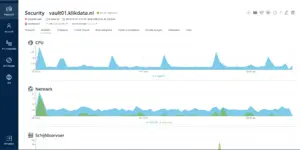
Save on data center costs with VPS Cloud and only pay for what you actually use Many IT environments still run on legacy systems
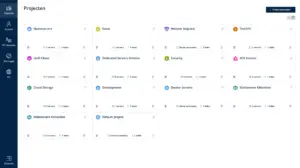
Digital sovereignty is no longer an abstract policy concept. For IT parties, it has become everyday practice. Customers are asking critical questions: At the same time, there is growing